This week a group of American Sailing sailors are aboard Chronos and participating in the Antigua Classic Yacht Race. Aboard the vessel is Kristen Berry, Director of North U and American Sailing Performance, and a sailboat racing educator.

This week a group of American Sailing sailors are aboard Chronos and participating in the Antigua Classic Yacht Race. Aboard the vessel is Kristen Berry, Director of North U and American Sailing Performance, and a sailboat racing educator.
Race Day One Recap A race day unlike any other… (and we mean that in the best possible way)
Day one of the 2026 Antigua Classics Race Week aboard the 54M Chronos delivered exactly what you hope for: great sailing, great food, and just enough chaos to remind everyone that the sea has final say.
The morning began as all proper race days should — with coffee strong enough to rattle the trade winds and a chef-prepared breakfast so good that racing briefly seemed optional. The crew considered this. The crew reconsidered. The crew went racing. Some decisions make themselves.
Our fearless — and impressively unflappable — Captain Kevin gathered everyone for the daily brief. Plans were made, roles were assigned, and ambitions were calibrated somewhere between “flawless execution” and “let’s at least look like we meant to do that.” We slipped lines from Nelson’s Dockyard without incident. In racing, a clean departure counts as points.
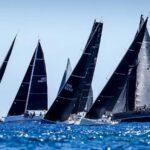
Out in Falmouth Harbour, the scene delivered. Classic yachts as far as the eye could follow — canvas aloft, teak gleaming, varnish applied in quantities that would make a boatbuilder weep with joy. Our competition — sister ship Kairos and the training vessel Vela — were already circling the pre-start like polite but thoroughly determined sharks.
Scheduled start: 1000. Kevin nailed it. Absolutely textbook — not a second early, not a breath late.
The race committee, however, was still putting the finishing touches on the course. So the crew, displaying a level of patience not always associated with competitive sailors, reset. Took a breath. Prepared to execute another perfect start. If you’re going to be good at something, might as well practice it twice.
Take two.
This time, Kairos and Vela arrived with a plan — hover, blanket, complicate. It didn’t work. Chronos launched off the line with the quiet confidence of a boat that had somewhere better to be. Spray flying, sails drawing, crew grinning. Textbook, if the textbook were written by people who were clearly enjoying themselves.
At the first mark, things got interesting. Vela managed a slight inside overlap — bowsprit just sneaking to our aft quarter, perfectly legal, deeply inconvenient. By the rules, that’s her turn, and she knew it. Both boats gybed in near-unison (North U translation: actually pretty slick boat handling), and suddenly we were in a proper drag race.
Short leg. No passing lanes. Time to think two moves ahead.
Kevin set his sights on the tack mark. Tacking a 54-meter classic off a reach is — and we say this with affection — an adventure. As both boats entered the island’s wind shadow and began rotating, Vela came around slightly faster. For a moment, the mark looked a little close for Chronos. The kind of close where you do the math, don’t love the answer, and commit anyway.
Then the main filled. The boat surged. Crisis quietly downgraded to “teachable moment,” which is coaching speak for “we’ll laugh about this at dinner.”
We came out beam-to-beam, Vela to windward. For a glorious few seconds it looked like we might roll her. Then — a wave, a puff, possibly a single opinionated seagull — tipped the scales, and Vela edged ahead.
No panic. Just work to do. Chronos doesn’t panic. She broods productively.
Sails trimmed with purpose, the crew settled into the long, satisfying art of the hunt. Meanwhile — and this is the part that should serve as a reminder to all of us — Kairos, having avoided the knife fight entirely, was quietly making gains from clean air. Clear air remains, as it always has been, completely undefeated.
As Vela and Chronos worked upwind, we passed the reaching fleet mid-chaos. One smaller boat had apparently formed a meaningful personal connection with a racing mark and was reluctant to let go. What followed could be described charitably as “creative interpretation of the rules of rounding.” The big boats, having gone wide and conservative, watched from a comfortable distance and said nothing. Some lessons are best observed from a safe distance.
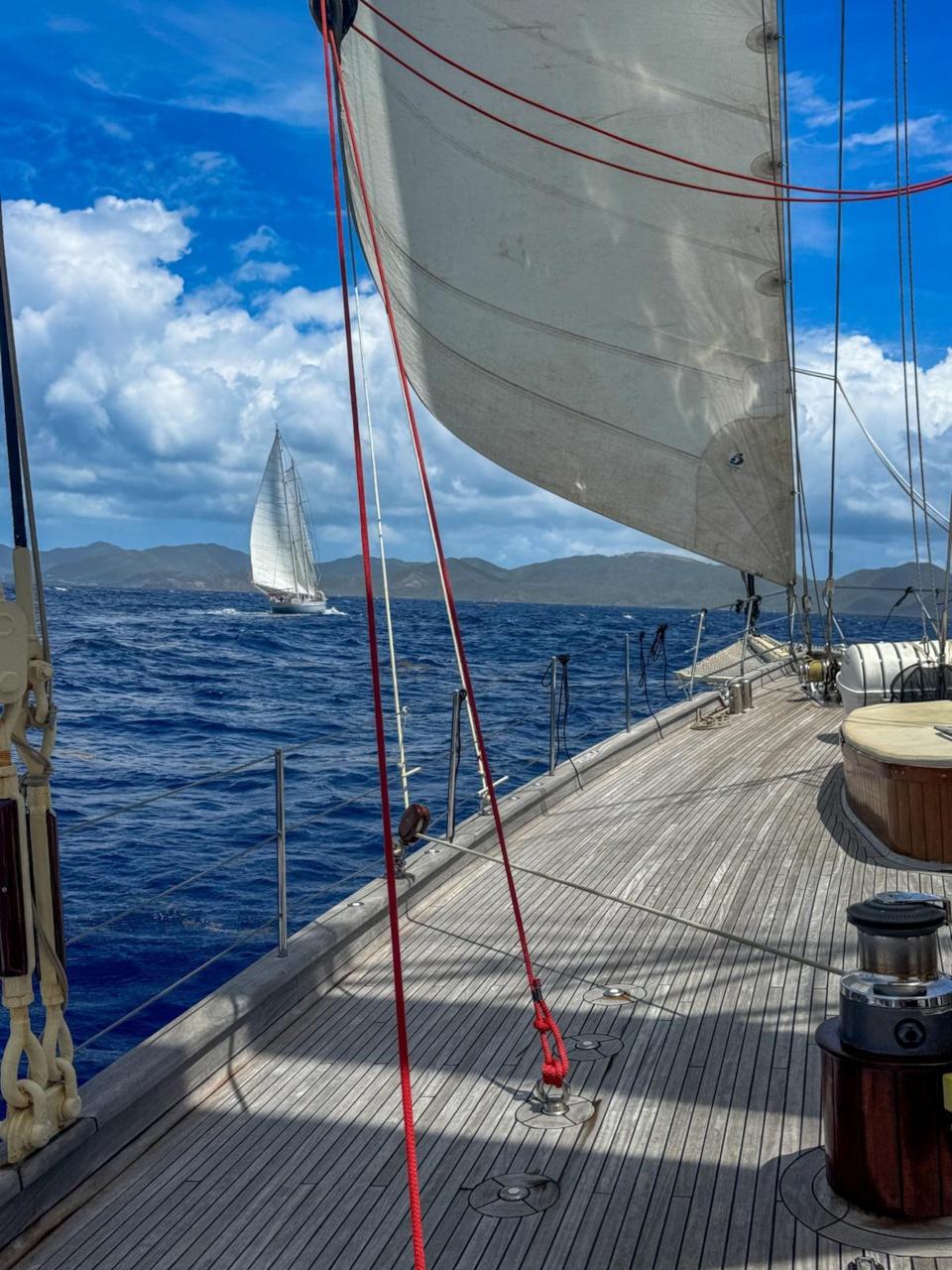
Back to the match race.
Chronos began to assert herself — sliding into a lane that made Vela’s life quietly miserable. Less freedom. More looking over the shoulder. This is, as any good coach will tell you, exactly where you want to be.
Then came the call: the layline to Falmouth mark.
Get it right and we’d fetch the mark clean — Vela buried in disturbed air, race effectively over. Get it wrong and the recap would need a different ending. Kevin ran the numbers. A nearly perfect tack – the trap had been sprung and Vela was in it.
But just minutes from the next mark the wind had other ideas. Header. Collective eyebrow raise across the deck.
But — critically — Vela got the same wind. Her jib softened. Options narrowed. The bold move was available, in the way that bold moves always are: high reward, high consequences, excellent story either way. They went for it, looking smart, but risky.
Kevin chose door number three: stay fast, stay patient, trust the boat, and let physics do the talking.
Chronos dug in. Heel increased. The sheets came on. Speed climbed — 4 knots, 6, 8 — and just like that, we drove through and left Vela reconsidering her life choices in our wake.
Which, as timing goes, was perfect. Lunch was ready.
A beautifully spiced Indian dal, fresh naan, and — for purely physiological recovery purposes — a mid-race cocktail or two. High-performance sailing is, at its core, about balance.
From there: a controlled run to the finish. One final gybe, then a long, almost ceremonial glide past some of the most breathtaking vessels on the planet, in one of the finest sailing venues anywhere on earth. The crew settled into that rare state that good race days occasionally produce — relaxed, smiling, and exactly where they wanted to be.
And then, right at the finish line, whales breaching off the bow. Because Antigua doesn’t do anything halfway. – and neither does the team of Chronos.
Not a bad way to start the week. More to come.